

Modern architecture emphasizes sustainable design principles, including energy-efficient building In the untouched waters of the Red Sea, among uninhabited islands and vibrant coral reefs, rises a project that redefines the relationship between luxury, nature, and contemporary design: Shebara Resort. Conceived as part of the ambitious Red Sea Global development in Saudi Arabia, this resort not only establishes a new benchmark in hospitality but also emerges as an architectural manifesto where futuristic forms, advanced sustainability, and avant-garde interior design exist in perfect harmony.
In this article, we explore the multiple dimensions of Shebara Resort: its architecture inspired by marine pearls, its transcendental interiors designed by Studio Paolo Ferrari, and its self-sufficient ecological model that positions it as a global reference.
The Context of Shebara Resort
An oasis in the heart of the Red Sea
Located in Tabuk Province, Shebara is set on a group of pristine islands surrounded by coral reefs, mangrove forests, seagrass beds, and desert dunes. This unique ecosystem demanded an architectural approach that is both respectful of nature and striking in its aesthetic language.
Red Sea Global, the developer behind the resort, envisioned Shebara as part of its mission to transform the Red Sea into a world-class sustainable tourism destination, offering immersive experiences that combine nature, comfort, and luxury.
A new destination in Saudi Arabia
More than just a hotel, Shebara represents Saudi Arabia’s repositioning as a hub for luxury hospitality in the Middle East. If Dubai has set the tone with iconic landmarks like the Museum of the Future, the Red Sea project aims to lead the way in experiential and eco-conscious tourism.
Architecture of Shebara Resort
Inspiration and concept: a string of pearls over water
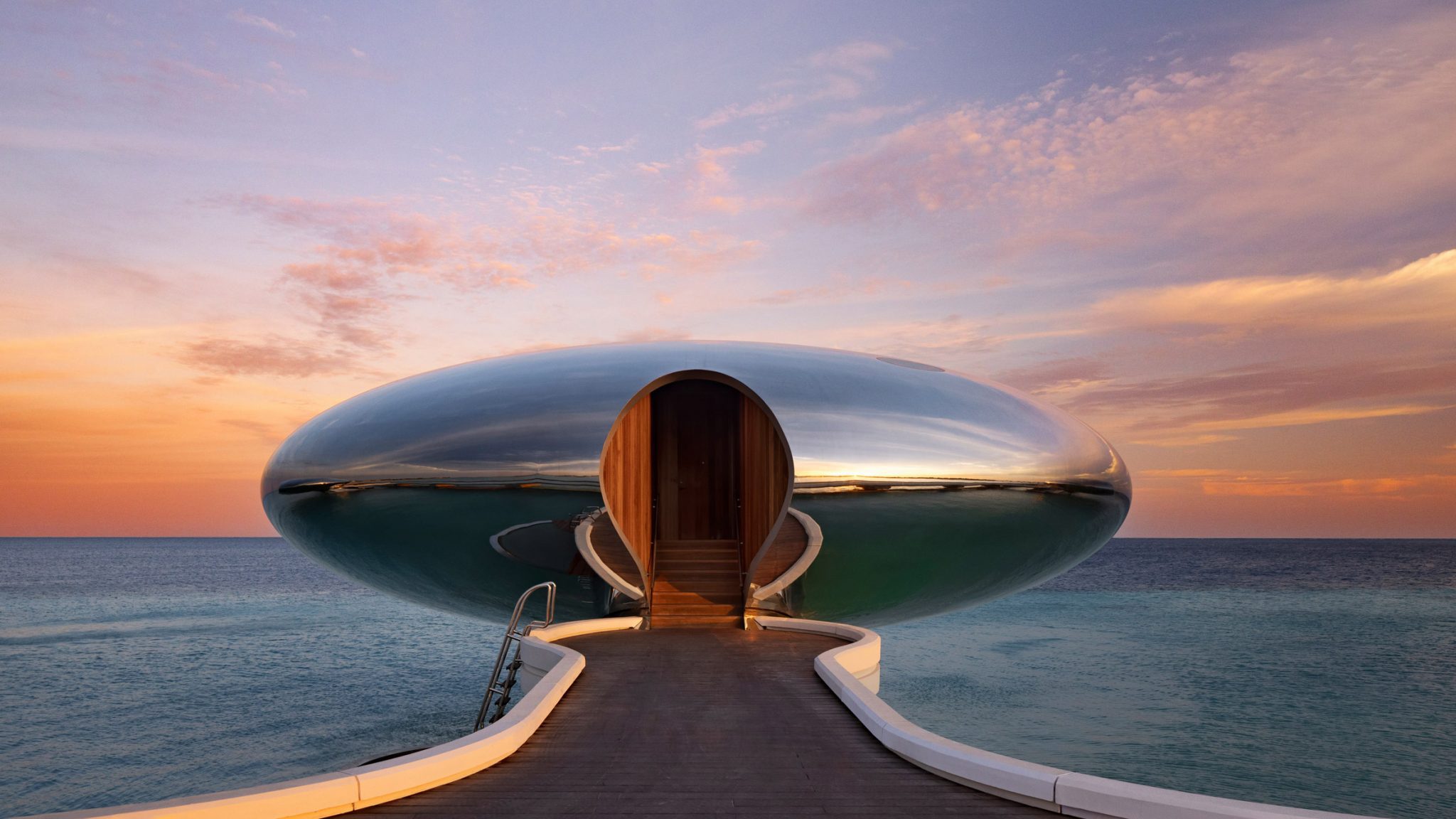
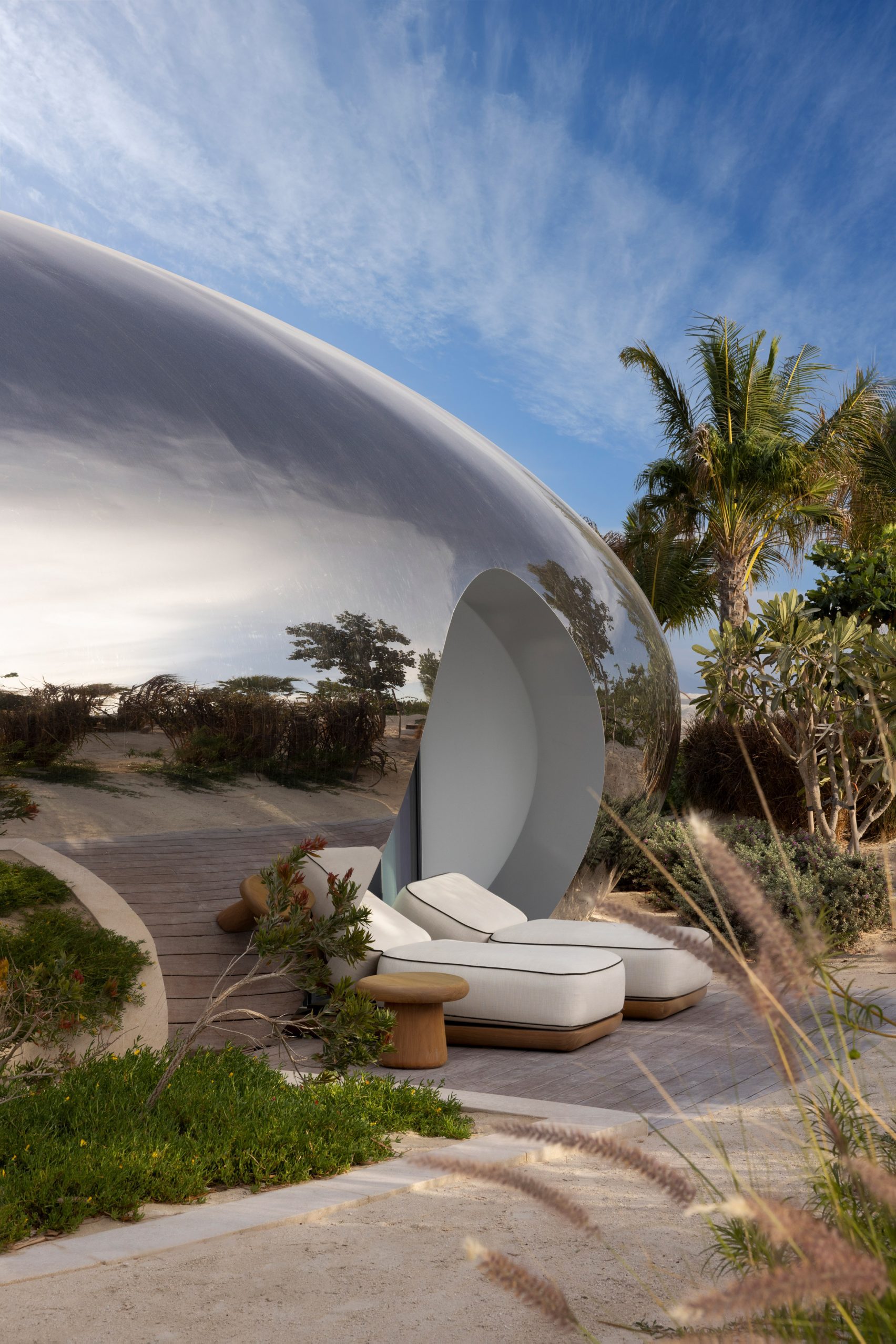
The visionary studio Killa Design, renowned for projects such as Dubai’s Museum of the Future, conceived Shebara as a series of spherical villas that resemble a string of pearls floating across the sea. Each villa is clad in polished stainless steel, reflecting the sky and water to merge seamlessly with the landscape.
This formal decision not only gives the resort an iconic identity but also creates a poetic dialogue with the marine ecosystem, where pearls symbolize both natural beauty and cultural heritage in the region.
Design and structure of the villas
Shebara Resort is composed of:
- 38 overwater villas, elevated above the sea and connected by wooden walkways.
- 35 beachfront villas, each with private gardens and direct access to the sand.
- Exclusive ensembles such as the Crown Villas and Royal Villas, featuring multiple residences on private islets with restricted access.
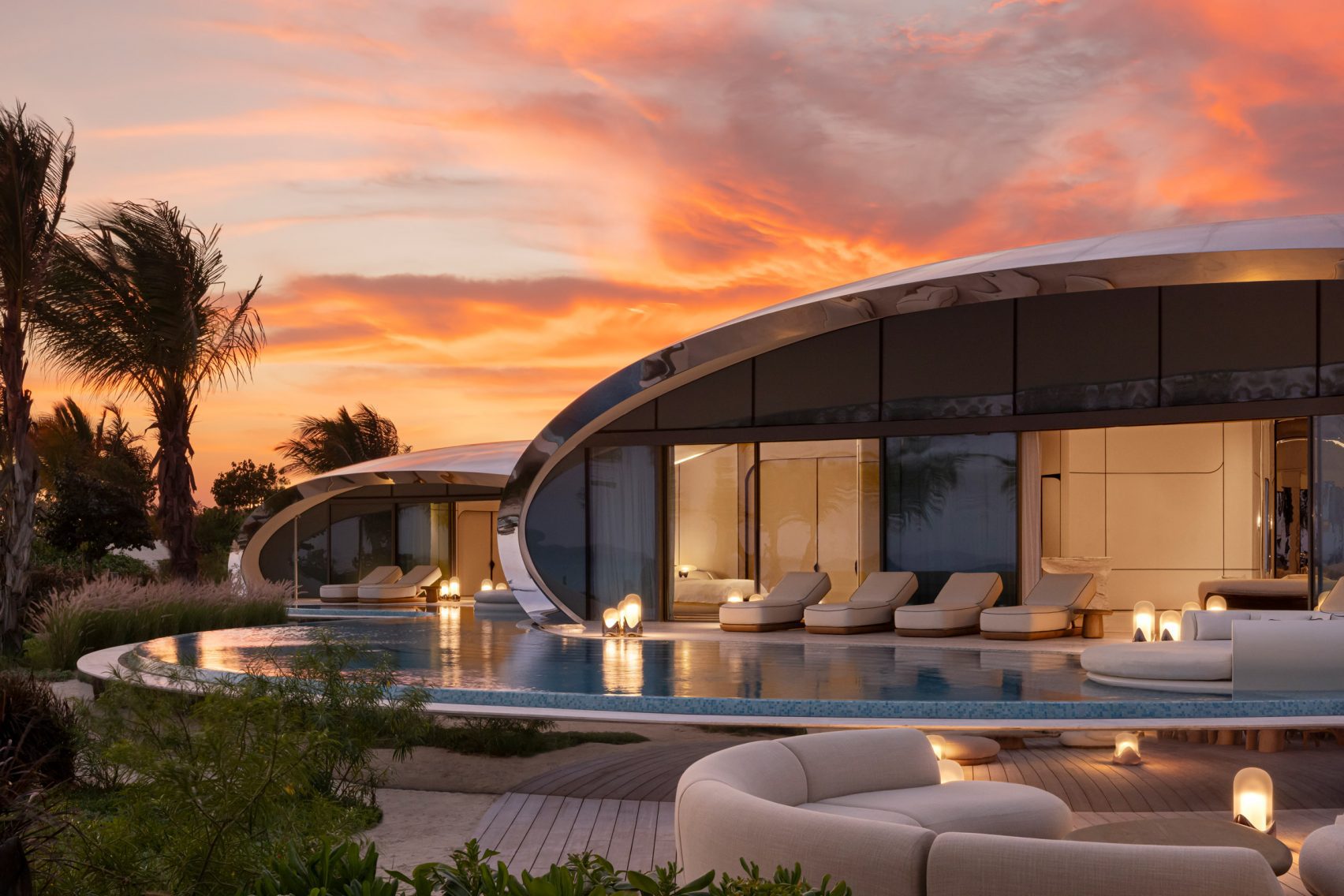
The villas come in one- and two-bedroom typologies, ranging from 103 m² to 189 m². Each includes outdoor terraces, infinity pools, and panoramic views of the sea.
Relationship with the environment
The architecture was designed so that each pod acts as a mirrored capsule, dissolving the boundary between built form and surrounding nature. Expansive glazing and direct access to outdoor patios allow guests to fully immerse themselves in the surrounding seascape.
Interiors by Studio Paolo Ferrari
Design philosophy: the transcendental
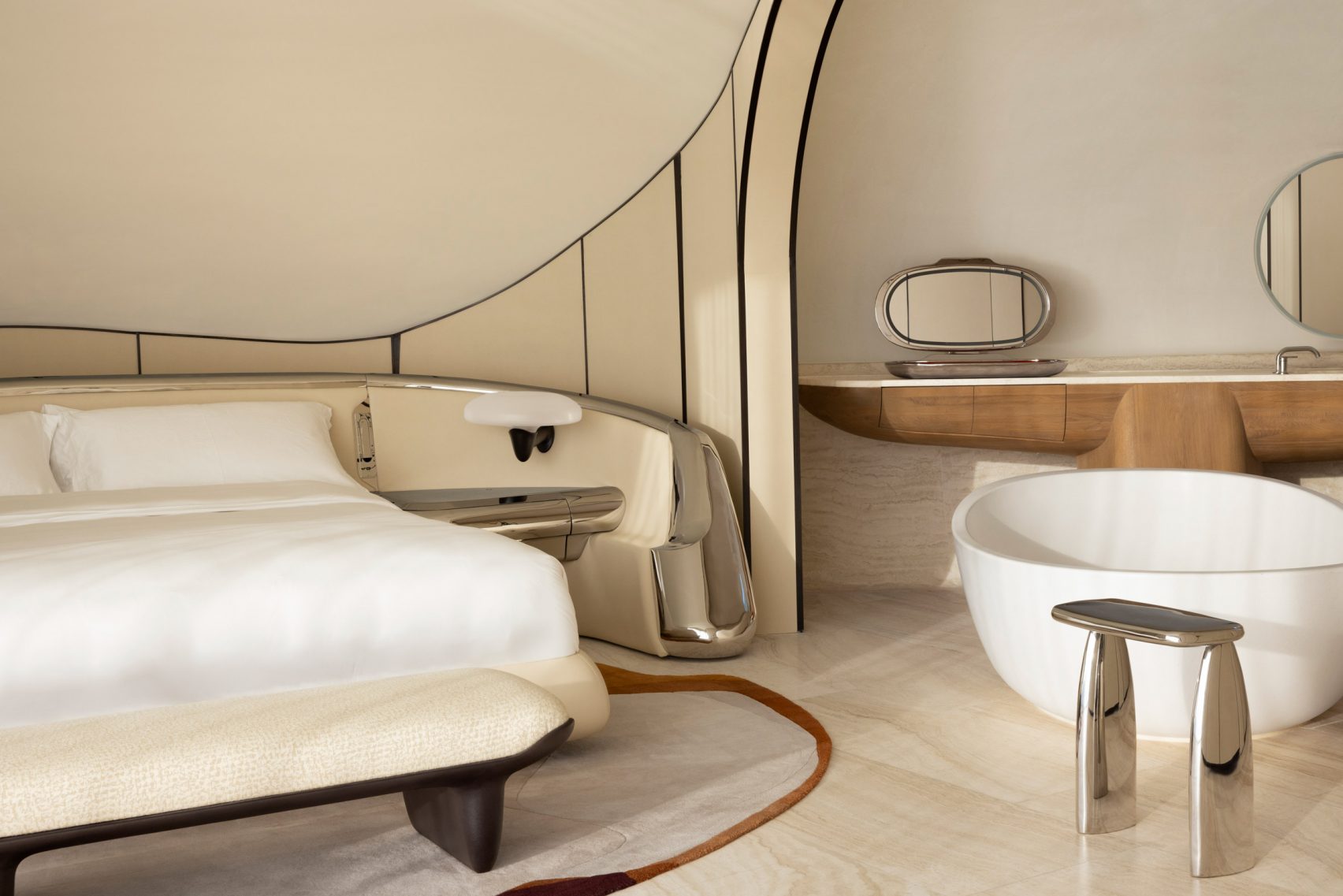
The interior design was entrusted to Toronto-based Studio Paolo Ferrari, which approached the project with a philosophy described as “transcendental”: dreamlike spaces that balance futuristic audacity with artisanal warmth.
As Paolo Ferrari himself explains:
“We wanted guests to feel as though they were inside a cinematic sequence, a space that feels otherworldly yet profoundly human.”
Bespoke furniture: futuristic craftsmanship
The unique curves of the villas required completely custom-made solutions. Highlights include:
- Curvilinear beds that trace the perimeter of the pods.
- Sculptural sofas and onyx dining tables that reinforce the sense of noble materiality.
- Hydraulic pod-shaped bars, with reflective steel exteriors that open automatically to reveal interiors lined in red leather.
These handcrafted pieces combine stainless steel, high-gloss woods, and semi-precious stones, showcasing the seamless integration of cutting-edge engineering with artisanal detail.
A multisensory guest experience
The interiors were designed to be immersive and multisensory. From atmospheric lighting to tactile finishes in leather and metal, every detail enhances the sense of exclusivity. Built-in furnishings and sculptural accents ensure that the interior architecture is inseparable from the overall guest experience.
Sustainability and Applied Technologies
A self-sufficient resort
Shebara Resort proudly holds a LEED Platinum certification, the highest standard of sustainability. The resort operates as an autonomous ecosystem supported by:
- A solar farm that powers 100% of its energy needs.
- A desalination plant that transforms seawater into potable water.
- A circular waste management system that minimizes landfill impact and promotes recycling.
Protecting the ecosystem
The project was carefully planned to avoid damage to the fragile coral reefs and surrounding habitats. With minimal land intervention and eco-friendly construction methods, Shebara stands as an example of responsible luxury, where development enhances rather than threatens the natural environment.
Shebara Resort in the International Landscape
Comparisons with iconic projects
Like the Museum of the Future in Dubai, Shebara represents a bold statement in regional architecture. Yet, while the former symbolizes innovation in urban environments, Shebara explores a new paradigm of futuristic, eco-conscious island architecture.
A new benchmark in luxury hospitality
In today’s global market, where travelers seek authentic and meaningful experiences, Shebara combines:
- Architectural iconography that defines its identity.
- Immersive interiors that heighten sensory engagement.
- True sustainability that distinguishes it from conventional luxury resorts.
As such, Shebara is set to become a global benchmark, inspiring new models of hospitality across the Mediterranean, the Caribbean, and Southeast Asia.
Frequently Asked Questions (FAQs)
What is the main inspiration behind Shebara Resort’s architecture?
The resort’s architecture was inspired by a string of pearls floating above the water, a metaphor that celebrates both the marine environment and the cultural legacy of pearl diving in the region.
What sustainability certifications does the resort hold?
Shebara Resort has achieved LEED Platinum certification, recognizing its commitment to renewable energy, water efficiency, and circular waste management.
Who are the designers behind the architecture and interiors?
The architecture was created by Killa Design, based in Dubai, while the interiors were envisioned by Studio Paolo Ferrari, based in Toronto.
Conclusion
Shebara Resort is more than a luxury destination—it is a living laboratory of what 21st-century hospitality can become. With its futuristic architecture, transcendental interiors, and pioneering sustainability model, Shebara redefines how design, nature, and tourism intersect.
In an era where discerning travelers seek transformative experiences, Shebara delivers a clear response: a place where luxury meets ecology, where innovation coexists with tradition, and where architecture becomes an immersive journey into the extraordinary.
Project Credits
Certification: LEED Platinum
Architecture: Killa Design
Interior Design: Studio Paolo Ferrari
Client/Developer: Red Sea Global
Location: Tabuk, Red Sea, Saudi Arabi